
Why Your Business Needs an AI Agent Before Your Competitor Gets One

Every few quarters, a window opens where a new technology grants its early adopters a quiet, compounding lead — and then it closes. AI agents are in that window now. This isn't about hype. It's about the cost of being second.
The Window Won't Stay Open
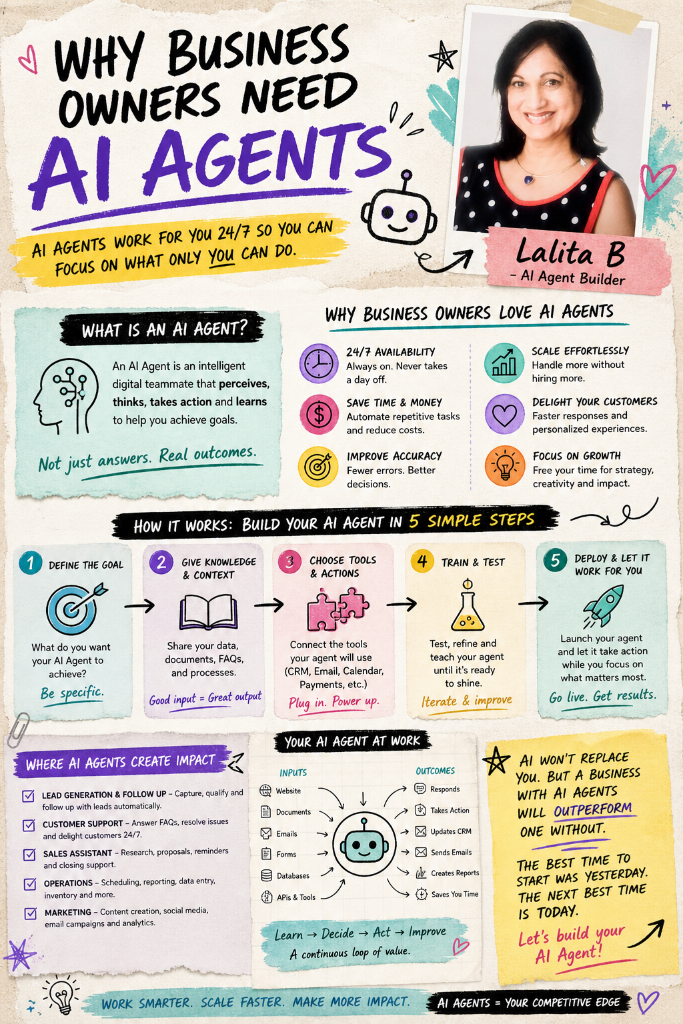
The teams deploying AI agents in 2026 aren't running experiments. They're wiring agents into real workflows — support queues, reporting cycles, follow-ups — and the agents are getting faster, cheaper, and uniquely trained on the company's own data with every week that passes.
The teams waiting for "the dust to settle" will inherit agents that look the same as everyone else's — generic, late, and tied to whatever vendor happens to have won the market by then. The competitive moat isn't the model. It's the head start on training, integration, and team muscle memory.
Why the First Mover Wins (This Time)
Three things compound for early AI adopters, and all three degrade quickly for laggards:
- Faster learning loops. Every conversation an agent handles becomes training data. Six months of real interactions creates an internal asset no competitor can buy.
- Cheaper unit economics. Early deployments rack up the integration cost once. Additions later cost a fraction of the first build.
- Stronger team fluency. Staff who've worked alongside an agent for a year manage it instinctively. New adopters will have to retrain their culture, not just their stack.
How to Find Your Best First Agent
You don't need to start with the hardest problem. You need the one with the clearest payoff:
- A workflow with high volume and high repetition
- A place where customers already feel friction
- A task that consumes senior staff time on work below their pay grade
For most businesses, that's some combination of customer support triage, internal reporting, follow-up automation, and language-coverage gaps. Pick one. Six weeks of focused deployment beats six months of analysis paralysis.
What Happens If You Wait
The competitor who starts now builds an agent that learns their customers, their tone, their edge cases — by Q4. The competitor who waits builds an agent that learns the vendor's defaults. By the time the second mover deploys, the first mover's agent is already a year into compound learning. There's no shortcut to that.
The Right First Step
Don't begin with the agent. Begin with the workflow audit — where is time being lost, where are customers waiting, where is judgment being wasted on tasks an agent could handle. The agent you build next should be the obvious answer to that audit. Not the flashiest one. The obvious one.
The first-mover advantage with AI agents isn't about being first to launch. It's about being first to learn.